Author: Taofiq OM

  • 5 Proactive Measures Your Business Must Take To Survive An Economic Meltdown

    5 Proactive Measures Your Business Must Take To Survive An Economic Meltdown

    An economic meltdown also referred to as a recession is a financially tough time for individuals, households and businesses. It is a time that comes with tradeoffs, prioritizing decisions and rethinking survival strategies. A recession does not necessarily spell doom for your business, rather, it is a time in business when proactive decisions must be taken through quality market analysis and trends, experience and solid judgement.

    Most businesses do not survive a period of recession not because their products or services are not needed in the market. Instead, their operational exits are occasioned by a lack of proper planning. overlooking essential market signals and not minimizing the business’ exposure to risks. Thus, to strengthen your business during an economic meltdown, it is important to identify the cracks in your system, and how you are doing your business now and look for ways to improve them.

    Consider these proactive measures to protect your business during an economic meltdown.

    1. Cash Flow Protection:

    Every business survives through the cashflow. Without a cash flow, the business is as good as dead. In fact, as a business, the effectiveness of your cash flow determines the healthiness of your business. In a recession, the part of the business that is foremostly affected is the cash flow. It is a time when customers are cutting down on their costs which usually leads to decreased sales and patronage. Yet as a business, cash must flow inwardly and outwardly to make the most of business opportunities.

    The obvious cash flow goal during this period is to bring in more income than before and reduce expenses than before. At this time, you want to studiously review your revenue and expense schedules to identify areas where more revenue can be generated as well as parts of the business where you can cut down costs to eventually reduce expenses – though you will have expenses as long as the business exists.

    One way to increase revenue is to identify paywall opportunities within your customer needs and offer them as part of your product or services. To reduce expenses, for instance, consider reducing the cost of inventory or third part services by negotiating lesser charges for a longer-term contract.

    2. Customer Prioritization:

    Making your customers a priority is essential to the survival of the business at all times; it becomes even more important to put them at the centre of your decision-making. Why? They are the ones with the money and they are seriously prioritizing their needs. Any poor service is a turnoff and a loss to a competition that is assiduously working on how to poach your customers to their offerings.

    Remember, a bird in hand is worth two in the bush. Before going after expanding your customer base to increase your revenue, you must ensure you are retaining and engaging the existing customers of your business. The customer experience is best described with the maxim: A good turn deserves another. A satisfied customer is usually a loyal customer who is likely to introduce your product or service to their family, friends and colleagues whom they believe also need your service. Hence, quality customer service could give you a domino effect in increasing your customer base, hence, leading to more revenue for the business.

    In making your customers a priority, you should remember that customer behaviour is changing. To this end, activating a customer loyalty programme, and adapting your product and/or services to better meet customers’ needs are some sneaky ways to facilitate retention and engagement.

    3. Growth Marketing:

    A common mistake most small businesses make during an economic downturn is to cut back on marketing to reduce expenses. While reducing your business expenses is a proven survival tactic in a recession, marketing is immune in this case. Customers are actively looking for products or services that fit their buying behaviours since they are restless in their decisions. Being there when they are actively looking for businesses that solve their problem is the most affordable way and is a surefire strategy to expand your customer base. For every penny spent on marketing – when done well -, you are sure to get back at least three (3) pennies.

    Meanwhile, when marketing, your unique selling proposition must help you stand out from the crowd. To do this, you need to review your marketing strategies and favour the ones that help you increase sales at the least cost possible. You can also try new marketing ideas to be prudent with your marketing spending. This could be exploring social media, word of mouth advertising as well as campaigns that show your customers you understand that the times are tough and empathize with them on their needs by making sure they get extensive value for every penny spent. These put together will increase your competitive advantage in the market and drive more sales for your business.

    4. Employee Branding:

    A demoralized workforce leads to low productivity which affects the efficiency of your business output. Another mistake businesses make during a recession is to let go of a reasonable percentage of their staff in the guise of reducing expenses. This is a counter-productive approach because such action would affect the corporate image of the business and introduce fear of the unknown into the system.

    Keeping employees motivated with built-up morale is a better approach during a recession. To do this, clearly communicate with your staff what is happening in the business and get them involved in finding solutions. You will marvel at how supportive they will be to do business survival. To this end, explore opportunities such s training your employees to undertake more duties to reduce the expenses that go to third-party service providers. You can also adopt a remote working approach and reduce work time in a bid to help your employees create free time they can use to engage in other personal productive activities that can further increase their income streams.

    5. Networking & Expert Advisory:

    Networking, and seeking professional advice are some unconventional approaches to managing your business during a recession.

    Networking can be a useful tool for your business in an economic meltdown as it offers you a pool of like-minded business owners who share thoughts on how they are equally coping. This can be very handy as you plan your businesses. During networking, you may also discover new business opportunities, business partners and even customers at a minimal cost to your business. You can achieve these through forming alliances with businesses offering complimentary services that you can leverage to expand your business reach.

    Good professional advice should never be undermined during an economic downturn. An example is seeking the opinion of a tax consultant on how to reduce your tax risks and exposure to liabilities. With proper tax planning, you can discover tax holidays or tax avoidance opportunities for your business which is also good for reducing expenses.

    On A Final Note

    No business can protect itself 100% against a recession. It is even more concerning if you are a small business because you may not have the luxury of reserves that help cushion the effect of a recession. As customer confidence and buying behaviour change, taking these proactive measures can help your business stay afloat and even record profit during (and when exiting) an economic downturn!


    DISCLAIMER:

    The material contained in this publication is provided for general information purposes only and does not contain a comprehensive analysis of each item described. Before taking (or not taking) any action, readers should seek professional advice specific to their situation. No liability is accepted for acts or omissions taken in reliance upon the contents of this alert.

    AOA Professional Services is an indigenous tax, regulatory and advisory service firm driven by the values of professionalism and partnership. For further information on the subject matter, reach out to our Teleconsulting Desk

  • AfCFTA: Promoting E-commerce and Formalising Informal Micro-Enterprises in Africa.

    AfCFTA: Promoting E-commerce and Formalising Informal Micro-Enterprises in Africa.

    The Organization for Economic Co-operation and Development (OECD) defines E-commerce as “The sale or purchase of goods or services, conducted over computer networks by methods specifically designed for the purpose of receiving or placing of orders”.

    The most popular definition of E-commerce is that of the World Trade Organization (WTO) which says that E-commerce is “the production, distribution, marketing, sale or delivery of goods and services by electronic means”.

    The African Continental Free Trade Area (AfCFTA) has opened a $3.4 trillion borderless market created by the AfCFTA to present an opportunity and rekindled hopes for African recovery through trade in a post-Covid-19 world.

    E-commerce and the Boost for Micro-Enterprises

    Micro enterprises are defined as having less than 10 employees with $100,000 or below in assets and annual turnover. There are 44 million registered micro enterprises on the continent and an estimated equal number or more operate in the informal economy. The upcoming AfCFTA protocol on E-commerce can leverage instant and inclusive digital payments to address the unique challenges of Africa’s micro-enterprises.

    There are widespread E-commerce use cases in Africa in which transactions are initiated online but delivery, fulfilment, or payment is achieved offline. In some other use cases, the order is placed offline, but the delivery, fulfilment or payment is achieved online.

    It is recommended that the upcoming E-commerce protocol takes a broader view of the definition of the term (E-commerce) as defined by the World Trade Organisation (WTO) and includes instant and inclusive payment channels such as mobile money to ensure the inclusion of Africa’s formal and informal micro-enterprises.

    According to a report by the World Bank, AfCFTA has the potential to boost regional income by 7% or $450 billion, speed up wage growth for women, and lift 30 million people out of extreme poverty by 2035. Wages for both skilled and unskilled workers will also increase by about 10 per cent.

    Formalizing Africa’s Informal Micro Enterprises

    The AfCFTA should formalise informal micro-enterprises through the protocol on E-commerce and should particularly encourage African countries to enact specific legislation simplifying registration and regulatory requirements for new firms, and simple tax systems including electronic payment of taxes.

    The International Monetary Fund (IMF) notes that policies that are effective in formalizing the informal sector include among other things, increased access to formal financial and economic resources and leveraging mobile money and digital payments.

    Conclusion

    Workers in the informal economy experi­ence specific disadvantages and the most severe decent work deficits. As individuals and a group, their well-being is precarious and vulnerable.

    AfCFTA is providing Africa with renewed hope for a future of economic prosperity. This hope is equally shared by Africans and even others outside the continent. Implementation of the AfCFTA agreement is reportedly going well and progress is being made with the negotiations.

    The AfCFTA protocol on E-commerce should set the agenda for seamless cross border payment to drive cross border trade and rally countries around the goal of creating the regulatory environment for informal micro-enterprises in Africa.


    DISCLAIMER:

    The material contained in this publication is provided for general information purposes only and does not contain a comprehensive analysis of each item described. Before taking (or not taking) any action, readers should seek professional advice specific to their situation. No liability is accepted for acts or omissions taken in reliance upon the contents of this alert.

    AOA Professional Services is an indigenous tax, regulatory and advisory service firm driven by the values of professionalism and partnership. For further information on the subject matter, reach out to our Africa International Helpdesk

  • AfCFTA: Trade Finance and Intra-Africa Trade

    AfCFTA: Trade Finance and Intra-Africa Trade

    Trade finance represents the financial instruments and products that are used by companies to facilitate international trade and commerce. Trade finance makes it possible and easier for importers and exporters to transact business through trade.

    President of the African Development Bank (AfDB), Akinwumi A. Adesina, stated that “trade finance is an important instrument for influencing Africa’s long-term economic development and structural transformation”.

    According to Baker McKenzie’s research with Oxford Economics – AfCFTA’s US$ 3 trillion Opportunity – “there are now unprecedented opportunities for Africa, and its trading partners, to reap economic benefits on the back of the possible improvements in transport infrastructure, reduction of red tape for cross-border dealings, renewed funding and improved liquidity”.

    AfCFTA and Opportunities for Africa:

    African Continental Free Trade Area (AfCFTA) will help African countries to diversify their economies, grow production capacity and broaden the range of products made in Africa, in particular improving the production of manufactured goods (and the potential for multinational companies to set up manufacturing plants in Africa). Closer integration of neighbouring economies is a potential avenue for creating scale and competitiveness through domestic market enlargement, thereby promoting development, and improving foreign investment through greater efficiency.

    The AfCFTA is expected to positively affect domestic manufacturing. For example, Manufacturing is currently the second-largest sector in the Nigerian economy (12.8% of GDP in 2020 at current prices), and the Government set an ambitious target of 20% manufacturing share of GDP by 2023.

    In Nigeria, the National Association of Chambers of Commerce, Industry, Mines and Agriculture (NACCIMA) is also closely working with the Nigerian Export Promotions Council (NEPC) to develop its members for export so that member’s products will meet international standards and facilitate acceptance globally.

    AfCFTA and Intra-African Trade:

    Intra-African trade is very low, standing at just 16 per cent of the continent’s total trade, compared with 19 per cent in Latin America, 51 per cent in Asia, 54 per cent in North America and 70 per cent in Europe.

    The AfCFTA, fundamentally, will put African economies-and African citizens on a better economic footing. It will enhance competitiveness and stimulate investment, innovation, and economic growth by increasing efficiency and eliminating trade barriers.

    The agreement commits countries to remove tariffs on 90 per cent of goods and incrementally apply the same to services. In addition, the removal of tariffs on goods, in particular, is projected to increase the value of intra-African trade by 15 to 25 per cent by 2040. This would translate to between $50 billion and $70 billion in value.

    AfCFTA and Pan-African Payments and Settlements Systems (PAPSS):

    The African Export-Import Bank (Afreximbank), working with the AfCFTA and the Central Bank of Nigeria (CBN) to come up with the PAPSS where if you, as a Nigerian exporter, send goods to Ghana, you will be paid locally in Naira; the other person does not need to go and be looking for the dollar to pay you. In the same way, a company will not go and be looking for a Dollar to carry out a transaction.

    PAPSS was developed by Afreximbank and Launched in January 2022 in Accra, Ghana.

    It is expected to boost Intra-African trade by transforming and facilitating payment, clearing and settlement for cross-border trade across Africa. PAPSS will enable a customer in one African country to pay in his currency, while a seller in another country receives payment also in his currency.

    At the unveiling of the payment platform, AfCFTA Secretary-General Wamkele Mene stated that the PAPSS is expected to boost intra-African trade and save the continent $5 billion yearly in payment transaction costs, while also playing an increasingly significant role in accelerating the continent’s transactions underpinning the operationalisation of the AfCFTA.

    The Afreximbank, as the main Settlement Agent for PAPSS, will provide settlement guarantees on the payment system and overdraft facilities to all settlement agents, in partnership with Africa’s participating Central Banks.PAPSS will effectively eliminate Africa’s financial borders, formalise and integrate Africa’s payment systems, and play a major role in facilitating and accelerating the huge AfCFTA-induced growth curve in intra-African trade.

    Before PAPSS, over 80 per cent of African cross-border payment transactions originating from African banks were said to be routed offshore for clearing and settlement using international banking relationships.

    Conclusion:

    The President of the African Development Bank stated that “Trade finance is an important instrument for influencing Africa’s long-term economic development and structural transformation. It can play a cross-sectoral role to facilitate the delivery of the Bank’s, “High 5” strategic priorities to Power and Light Up Africa”, “Feed Africa”, “Industrialize Africa”, “Integrate Africa” and “Improve the quality of life of the people of Africa.”

    Intra-African trade accounted for approximately USD 1 billion of total trade supported, 60% of all supported transactions are attributable to SMEs. Similarly, over 62% of all transactions have a tenor of fewer than 6 months, signifying the short-term nature of trade finance transactions in general.

    Culled from AfDB’s Trade Finance Program

    DISCLAIMER:

    The material contained in this publication is provided for general information purposes only and does not contain a comprehensive analysis of each item described. Before taking (or not taking) any action, readers should seek professional advice specific to their situation. No liability is accepted for acts or omissions taken in reliance upon the contents of this alert.

    AOA Professional Services is an indigenous tax, regulatory and advisory service firm driven by the values of professionalism and partnership. For further information on the subject matter, reach out to our Africa International Helpdesk

  • Business Process Improvement: Reasons & Benefits

    Business Process Improvement: Reasons & Benefits

    James Harrington said:

    “Everything we do today can be done better by concentrating on the process.”

    Business Process Improvement (BPI) refers to diagnosing, analyzing, and improving existing business processes in an enterprise to enhance performance and provide continuous business growth.

    In a simpler term, BPI is all about making changes (improvements) to the way you work (your process) to see better results for your business.

    More than ever, optimizing business activities in the light of a more technologically driven economy is non-negotiable. Hence, factoring BPI into your organization’s growth plan helps to achieve the following:

    1. Eliminates Waste of Resources:

    Business process improvement helps to better plan, organize, and thoroughly prepare a company for the long term. By establishing clear guidelines and procedures, you know your goals, the means to achieve them, what to avoid, and what to look for. As a business implementing BPI, you get to track important metrics related to your progress. Thus, when you track the progress, you can eliminate waste—be it money, resources, or time—in real-time and act at the right moment.

    2. Increased Productivity and Efficiency:

    Effective practices that support business process improvement can help remove inefficiencies and ultimately improve the productivity of team members. With tools for enhancing processes such as AOAHUB, organizations can evaluate performance appraisals and evolve processes without restricting the way teams work. Reporting and analytics provide insights into delivery trends to remove bottlenecks, predict future issues, and adapt workflow processes for improved productivity.

    3. Reshaping Company Culture:

    Even though most companies pay less attention to company culture, it has been remarkably recognized as a contributor to an organization’s growth by 33% according to TimeCamp.

    BPI evaluates which organizational procedures and regulations add value to the company and help to steer it in the right direction. Thus, Improving business processes supports the strategy, mission, vision, and goals in line with the culture and eliminates those that don’t support company culture. Or create a new one that aligns with company values.

    The benefits of Business Process Improvement are numerous and the reason to put one in place is immense. It’s a great way to transform your business to stand out on the market and adapt to global changes in the business world.


    DISCLAIMER:

    The material contained in this publication is provided for general information purposes only and does not contain a comprehensive analysis of each item described. Before taking (or not taking) any action, readers should seek professional advice specific to their situation. No liability is accepted for acts or omissions taken in reliance upon the contents of this alert.

    AOA Professional Services is an indigenous tax, regulatory and advisory service firm driven by the values of professionalism and partnership. For further information on the subject matter, reach out to our Teleconsulting Desk

  • 2022: 3 Must-Dos for MSMEs

    2022: 3 Must-Dos for MSMEs

    Micro, Small and Medium-sized Enterprises are no doubt the core engine of growth in every economy. As we go into the last part of the first quarter of the administrative year, it is important to remind key business decision-makers that the time for planning and it is time to start executing.

    No doubt, the effect of the Covid19 pandemic is still very much present as new variants keep showing up, thus, MSME must strive to be flexible with an innovative approach to doing business to stay competitive.

    Here are three must-dos for MSMEs in 2022 if you want to stay afloat:

    1. Support Customer/Buyer Behaviour

    Increasingly, customers now choose how to spend their money. They are now paying for values. Thus, it is time to ask yourselves, what are the values that are important to our customers and how is our brand aligning with them. For example, a logistics business must work on timely delivery and integration of different payment methods that allow the business to thrive on the go among others.

    In addition, there has been a mindful perspective towards how customers now see businesses, particularly as they relate to brand values. It is then important that MSMEs showcase considerable touchpoints in their business model to engage in smart and intelligent systems that aid effective buying behaviour.

    2. Invest in Automation

    Do not try to carry out all business operations yourself, manually. Gone are those days, dear business owner. It is important that you allow technology to drive most parts of your business operations such as documentation, human resource management, bookkeeping etc.

    Depending on the nature of your business, it is important you leverage technology – particularly the function of automation to drive deliverables.

    Aside from reducing the cost of operations drastically, it equally fosters more efficiency than the manual system. For instance, instead of manually tracking employees’ time attendance at work, payroll management etc.; software like AOAHUB automates the process easily and still provide you with a detailed report with which you can make informed decision underlying HR & Payroll.

    3. Improve Employee Branding With Work-Life Balance

    As hard as it seemed to identify critical indicators of work-life balance, it is important to engage employees in a way that guarantees personal and career satisfaction to get the very best input of work from them too. Initiatives such as Work From Home (WFH) that were accelerated by the pandemic should be a considerable factor in today’s work structure. It is believed that remote working is the future of work, regardless of criticisms of its absolute feasibility.

    In addition, facilitate employees’ training either in form of coaching or mentoring. A well-trained and equipped employee-employer system breeds an efficient and productive workforce. Help your staff members, acquire in-demand skills related to their role and have a system that allows them to healthily put what they have learnt into practice.


    DISCLAIMER:

    The material contained in this publication is provided for general information purposes only and does not contain a comprehensive analysis of each item described. Before taking (or not taking) any action, readers should seek professional advice specific to their situation. No liability is accepted for acts or omissions taken in reliance upon the contents of this alert.

    AOA Professional Services is an indigenous tax, regulatory and advisory service firm driven by the values of professionalism and partnership. For further information on the subject matter, reach out to our Teleconsulting Desk

  • AfCFTA: Administration of Rules of Origin

    AfCFTA: Administration of Rules of Origin

    Rules of origin are the basis required to ascertain the home source of a product. Their importance is derived from the fact that duties and limitations in several cases depend upon the source of imports.

    With the African Continental Free Trade Area (AfCFTA) bringing together 1.3 billion people in 55 African countries to create the world’s largest free trade area as measured by the number of participating Member States, the Economic Development in Africa Report 2019 notes that the rules of origin could be a revolutionary for Africa as long as they are simple, transparent, business-friendly and predictable.

    In essence, rules of origin will enable goods to move duty-free within a free trade area (FTA) as long as these goods qualify as originating within the FTA.

    It is required to set up a committee on rules of origin under the AfCFTA agreement to annually review the implementation of the rules, and their provisions and submit reports and recommendations to a committee of senior trade officials.

    Rules of origin are the foundations for the successful implementation of preferential trade liberalization, the critical policy tool needed to make any Free Trade Area (FTA) functional and are of necessary importance in creating opportunities for African Least Developed Countries (LDCs) to boost trade.

    UNCTAD recommends that rules of origin should be kept simple, transparent, business-friendly, predictable and not costly or complex to comply with as companies may instead forego these preferences and choose to trade with partners outside the AfCFTA.

    “The AfCFTA is a landmark achievement in the continent’s history of regional integration and is expected to generate significant gains. But it is the rules of origin that will determine whether preferential trade liberalization under the AfCFTA can be a game-changer for Africa’s industrialization”.

    UNCTAD Secretary-General Mukhisa Kituyi

    President Muhammadu Buhari has assured the Manufacturers Association of Nigeria (MAN) that the federal government will take relevant measures to enhance access to foreign exchange for the importation of raw materials and machines that are not available locally. The President also said that Nigeria would expedite the process of setting up the Designated Competent Authority that will superintend the administration of Rules of Origin and Commission as well as the automation for issuance of electronic Certificate of Origin.

    Rules of origin are used:

    • to apply measures and instruments of commercial policy such as anti-dumping duties and protective measures;
    • to decide if imported products shall receive most-favoured-nation (MFN) treatment or preferential treatment;
    • for trade statistics;
    • for the use of labelling and marking requirements; and
    • for government procurement.

    DISCLAIMER:

    The material contained in this publication is provided for general information purposes only and does not contain a comprehensive analysis of each item described. Before taking (or not taking) any action, readers should seek professional advice specific to their situation. No liability is accepted for acts or omissions taken in reliance upon the contents of this alert.

    AOA Professional Services is an indigenous tax, regulatory and advisory service firm driven by the values of professionalism and partnership. For further information on the subject matter, reach out to our Africa International Helpdesk

  • 3 Ways To Leverage Digital Disruption

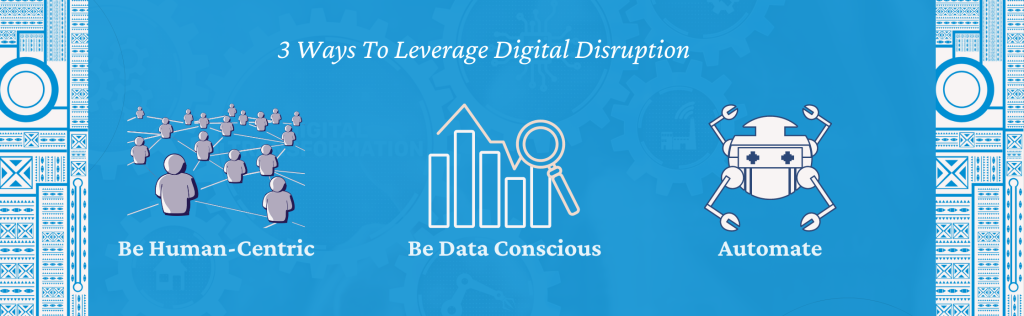
    3 Ways To Leverage Digital Disruption

    An intriguing update that shook the business waves at the start of the year was that Stanbic IBTC was closing down 50% of its physical branch in Nigeria solely because the bank wants to go fully digital as a step toward prioritising full-scale digital banking.

    Disruption is inevitable for every business and at some point, digital disruption will come for every organization regardless of size. Those who prepare for it will be flexible enough to thrive in a time of disruption, but the organization that overlooks it is surely handshaking exit as a business.

    1. Be Human-Centric

    No organization can exist without its’ people. Customers, investors, vendors, employees and a list of other persons affected by the operations of an organization are crucial to a business’s survival. Regardless of digital disruption, your people should come first. Technology being the centre point of digital disruption should be seen as an ENABLER of processes and not the process itself.

    Make your people the focus of every tool and strategy intended to drive disruption and not the other way round. Be sure that your chosen method of leveraging digital disruption solves the challenges of your people. That way, disruption is sure to foster business growth. But how do you do this? Check Number Two.

    2. Be Data Conscious

    In times of disruption, disregarding data is equal to failure. it is the foundation of every strategy and methodology to be used to control disruption to your business’ favour. Do not overlook even the smallest of data. Customer interaction, buyer journey, employee reactions, investor comments etc. are all sources of critical data essential to personalizing the experience of your people during a disruption.

    Be sure to be on top of trends as well as government policies. These too are avenues for micro-moments that shape how disruption can be adopted. Collecting and analyzing this data triggers your business for proper adoption.

    3. Automate

    Digital disruption is all about using technology to drive business processes. today we have different kinds of technology doing this. From Blockchain to Software-As-A-Service (SaaS), ERP Systems etc. They all have one thing in common, and that is to help us do business more efficiently and effectively.

    However, with digital disruption comes tonnes of activities and processes to be managed. There is no way direct human interaction can sufficiently deliver a worthwhile experience. Hence, automation becomes inevitable. Automating business processes such as Bookkeeping, HR, Payroll Management, Investor Relationship, Compliance etc. with tools like AOAHUB makes digital disruption the equity harnessed for your organizational growth.


    DISCLAIMER:

    The material contained in this publication is provided for general information purposes only and does not contain a comprehensive analysis of each item described. Before taking (or not taking) any action, readers should seek professional advice specific to their situation. No liability is accepted for acts or omissions taken in reliance upon the contents of this alert.

    AOA Professional Services is an indigenous tax, regulatory and advisory service firm driven by the values of professionalism and partnership. For further information on the subject matter, reach out to our Teleconsulting Desk

  • AfCFTA & PASPPS: Accelerating Africa’s Trade

    AfCFTA & PASPPS: Accelerating Africa’s Trade

    The AfCFTA, African Export-Import Bank, and other partners on 13th January officially launched a unified payment system for the African market. This is the Pan-African Payments and Settlements Systems(PAPSS). Its primary goal is to boost Intra-African trade significantly by making cross-border payments less reliant on third party currencies.

    PAPSS allows a customer in one African country to pay in their currency, while a seller in another country receives payment in their currency. With PAPSS, this would facilitate the African Continental Free Trade Agreement (AfCFTA) aim to bring together the 54 African countries to trade under a single market with liberalized tariffs and the removal of the non-tariff barriers to cross-border trading.

    The commencement of PAPSS would solve reliance on third currencies- US Dollars, Euros and the British Pounds for the clearing and settlement of cross-border payments and transactions which in turn leads to high costs and long transaction times. At the moment, 42 currencies are being spent on the continent and only a couple of those currencies have any value outside the countries where they are tender.

    Before PAPSS, for example, a buyer in Nigeria who intends to buy goods from a seller in South Africa will be required to pay the seller in a third currency from outside the continent- either the US dollar, the Euros or the British Pounds, pay the extra charges to have the agreed sum processed and sent to the seller in South Africa and have to wait several days for transactions to clear.

    Aside from time constraints, the method of currency conversion adds to the value of doing business and actually, the money has got to leave Africa before being sent back to South Africa. With the start and functioning of PAPSS, the same business would only pay in Nigerian Naira for the goods, while the seller will receive South African Rand.

    The PAPSS serves as the clearing, processing and settlement agent in the transaction for MSMEs in Nigeria and other emerging economies facing high import and export expenses, as well as unknown transaction delays due to limited correspondent bank relationships, foreign currency availability, and cross-border transaction rail capacity would be addressed with a commercially viable modern solution in the continent.

    In conclusion, Pamela Coke-Hamilton, executive of the International Trade Centre, said:

    “In these uncertain times, African countries now have a commercially viable tool which will address a critical barrier for MSMEs to trade competitively. ITC is preparing enterprises to profit from PAPSS, creating new opportunities for growth in cross-border e-commerce and sustainable trade.”


    DISCLAIMER:

    The material contained in this publication is provided for general information purposes only and does not contain a comprehensive analysis of each item described. Before taking (or not taking) any action, readers should seek professional advice specific to their situation. No liability is accepted for acts or omissions taken in reliance upon the contents of this alert.

    AOA Professional Services is an indigenous tax, regulatory and advisory service firm driven by the values of professionalism and partnership. For further information on the subject matter, reach out to our Africa International Helpdesk

  • Want A Successful Administrative Year? Consider these 4 things

    Want A Successful Administrative Year? Consider these 4 things

    The new year inspires renewed energy and excitement for what could happen. It’s a fresh start and the perfect time to reflect on the past and plan for the future – to set goals and figure out how to meet them. Even though Y2022 has begun, it’s not too late to kick things off rightly to help ensure growth for your business.

    Here are four things you must consider if you want a successful administrative year:

    1. Review Previous Year Performance

    Look back at the previous year. Assess what went well and what did not, and find takeaways from both. The mistakes and successes. Review your business plan and make updates. Quick posers to doing that: Were there big moves you wanted to make last year but did not? Did you want to expand your team? Expand your reach and presence? Take a hard look at where you’ve been, and perhaps where you wanted to go but could not, so you can better know where you should be heading.

    2. Build Projection

    Projections are a guide of two benefits – Roadmap & Motivation. As you develop projections for the year, consider the broader economic conditions and how they might impact your market. Of course, keep in mind that projections are guides. It’s impossible to know what will happen, so ground your projections in as much data and objectivity. Knowing the latest business trends and economic news will arm you to handle the constantly changing environment. Advisably, do this with research and preferably speak to a consultant who can bring experience and criticism that bolster what you have.

    3. Mind The Budget

    It can be difficult to keep track of all expenses, especially while juggling many areas of the business, but it’s crucial. Businesses can maximize kobo in numerous ways – from tracking tax-deductible, business expenses and minimizing long payment terms, to making monthly instead of annual insurance payments. Meanwhile, you must make smart decisions about your budget and not just about cost-cutting. Your budget is to make sure your spending fosters sustainable growth & development.

    As Benjamin Franklin rightly said:

    “Beware of little expenses. A small leak will sink a shop”.

    4. Improve on Communication & Feedback

    Effective communication is critical to business success. Encourage your employees, customers/clients & shareholders to share their thoughts about the past. Provide several ways they can communicate with you, from the regular team and one-on-one meetings to an online chat platform. Have an open-door policy and be open to receiving honest feedback and ideas. Set the tone for consistent and transparent communication. It will help you realize what needs to be improved and what is to be sustained. In addition, improved communication can help to define work-life balance for employees which in turn boosts productivity.


    DISCLAIMER:

    The material contained in this publication is provided for general information purposes only and does not contain a comprehensive analysis of each item described. Before taking (or not taking) any action, readers should seek professional advice specific to their situation. No liability is accepted for acts or omissions taken in reliance upon the contents of this alert.

    AOA Professional Services is an indigenous tax, regulatory and advisory service firm driven by the values of professionalism and partnership. For further information on the subject matter, reach out to our Teleconsulting Desk

  • AfCFTA: The Need to Review Double Taxation Arrangement

    AfCFTA: The Need to Review Double Taxation Arrangement

    A Tax Treaty otherwise called an Avoidance of Double Taxation Agreement (ADTA) or Double Taxation Agreement (DTA) could be described as an agreement between two or more countries (otherwise known as the Contracting States or parties) to make sure that a resident of one or both of the contracting countries does not suffer from paying tax twice on the same income in both jurisdictions or unduly benefit from not paying appropriate taxes in any of the countries through tax evasion or avoidance. The Agreement covers taxes on income and capital only and does not extend to consumption taxes such as Value Added Tax or Sales Taxes.

    Over the last few decades, the number of bilateral tax treaties has increased dramatically. The United Nations Model Double Taxation Convention Between Developed and Developing Countries (“UN Model Convention”) and the Organisation for Economic Co-operation and Development’s Model Tax Convention on Income and on Capital2 (“OECD Model Convention”) provide models for countries to use in negotiating the terms of their treaties and are regularly updated. For purposes of both the UN and OECD Model Conventions, it is assumed that any rules for the application of the provisions of those Model Conventions are a matter for the domestic law of the contracting states. Consequently, there are no general rules in the Model Conventions or in the Commentaries concerning how the provisions of the treaty should be applied.

    Speaking at the launch of “Dangers of Double Tax Agreement in Financing Development: a case study in Ghana,” Mrs. Ofori-Kwafo said the report emphasized the need to adopt a harmonized DTA model, which would take into consideration diversities in the African economies.

    She said in view of that, Tax Justice Network Africa (TJNA), in collaboration with its members of South and Eastern Africa Trade Information and Negotiation Institute (SEATINI Uganda), Civil Society Legislative Advocacy Centre Nigeria (CISLAC), Ghana Integrity Initiative (GII), Policy Forum Tanzania and Centre for Trade Policy and Development (CTPD) Zambia with support from Open Society Foundation (OSF) had conducted a joint study on the Dangers of DTAs in Financing Development in Africa with case studies of Ghana, Nigeria, Tanzania, Uganda, and Zambia.

    In general, the tax authorities of a country should apply the provisions of its tax treaties to prevent tax avoidance and evasion. This requires careful consideration of the inclusion of anti-abuse rules in tax treaties and the adoption of domestic anti-avoidance rules that can be applied to treaty abuses. However, in addition to ensuring that the appropriate anti-avoidance rules are in place, the tax authorities must have the capacity to interpret, apply and enforce those rules concerning treaty abuses.

    Given the African Continental Free Trade Agreement (AfCFTA), there is, therefore, the need for a thorough review and renegotiation of the Double Taxation Agreement to resolve challenges regarding tax evasion and avoidance in the continent.


    DISCLAIMER:

    The material contained in this publication is provided for general information purposes only and does not contain a comprehensive analysis of each item described. Before taking (or not taking) any action, readers should seek professional advice specific to their situation. No liability is accepted for acts or omissions taken in reliance upon the contents of this alert.

    AOA Professional Services is an indigenous tax, regulatory and advisory service firm driven by the values of professionalism and partnership. For further information on the subject matter, reach out to our Africa International Helpdesk