Author: Taofiq OM

  • AfCFTA: Potentials & Challenges for MSMEs in Africa

    AfCFTA: Potentials & Challenges for MSMEs in Africa

    In 2018, 54 of the 55 countries that make up the African Union (AU) established the African Continental Free Trade Area (AfCFTA). It was created by the African Continental Free Trade Agreement to be a free trade area to fast-track economic development on the African Continent, especially through the small and medium-sized enterprises (SMEs).

    The AfCFTA has opened a $3.4 trillion borderless market created to present an opportunity and rekindle hopes for African recovery through trade in a post-Covid-19 world. As nations continue to battle a pandemic that does not respect national borders, the Intra-African trade is currently low at 14.4 percent of total African exports. The United Nations Conference on Trade and Development (UNCTAD) estimates that the AfCFTA could boost intra-African trade by about 33 percent and cut the continent’s trade deficit by 51 percent.

    The latest Economic Development report shows that about 34 percent of African households live below the international poverty line ($1.9 per day), and around 40 percent of the total wealth is owned by approximately 0.0001 percent of the continent’s population. Then the pandemic has exacerbated inequalities and vulnerabilities of marginalized groups, resulting in an additional 37 million people in sub-Saharan Africa living in extreme poverty.

    A key question is how economic growth through regional integration can contribute to poverty reduction, cut inequality, and foster inclusive development, which is the main objective of the African Union’s Agenda 2063. Reports have shown that the continent’s current untapped export potential amounts to $21.9 billion, equivalent to 43 percent of intra-African exports. An additional $9.2 billion of export potential can be realized through partial tariff liberalization under the AfCFTA over the next five years.

    So what are we saying here?

    • With the AfCFTA, the market potential is huge but there is an equally huge challenge, which is that of a wide poverty line in the continent.
    • MSMEs are at the centre of leveraging the potential of the market and also solving the problem of poverty through job creation.
    • MSMEs would also help reduce over-reliance on foreign goods while enhancing the production of locally made goods which would boost infrastructure within the African Continent.

    According to the National Bureau of Statistics (NBS) and the Small and Medium Enterprises Development Agency of Nigeria (SMEDAN), SMEs in Nigeria account for about 96 percent of registered Nigerian businesses, employ about 75 percent of the national labour force, and contribute 48 percent to the country’s Gross Domestic Product (GDP). A 2020 survey of 1,804 MSMEs across Nigeria by the Nigerian Association of Chambers of Commerce, Industry, Mines, and Agriculture (NACCIMA) showed that more than 50 percent of those surveyed were most concerned about the threat posed by imported cheaper goods competing with local products due to the AfCFTA, while only 20 percent were aware of the existence of the AfCFTA.

    In conclusion, it’s not just policies and procedural shortcomings that have resulted in limited cross-border trade volumes in Africa. Medium Small and Middle-Scale Enterprises (MSMEs) and other stakeholders in Africa must look deeper into why intra-African trade has been slow to gain traction, leading to Africa’s ongoing heavy reliance on imports and taking advantage where necessary to grow their business and market share in Africa.


    DISCLAIMER:

    The material contained in this publication is provided for general information purposes only and does not contain a comprehensive analysis of each item described. Before taking (or not taking) any action, readers should seek professional advice specific to their situation. No liability is accepted for acts or omissions taken in reliance upon the contents of this alert.

    AOA Professional Services is an indigenous tax, regulatory and advisory service firm driven by the values of professionalism and partnership. For further information on the subject matter, reach out to our Africa International Helpdesk

  • Brand & Branding

    Brand & Branding

    A Brand! What comes to mind when you read, see or interact with the term as an MSME? Is it your logo? Or the colours of your business? Well, for most business owners, it is as much as the posers while others believe it includes your website, social media presence, etc. But is that all that it is?

    It may interest you to know that a brand is far much more than the aforementioned. In fact, for the most part, a brand is more abstract than concrete. A brand of any business is about anything – physical or not – that distinguishes a business from another. Beyond all that has been mentioned above, it will include your culture, value, and even corporate positioning in the minds of every stakeholder in your business; not just your customers but also your employees, regulatory bodies, etc.

    In short, branding is the process of building a brand and honestly it revolves around everything you are as a business and it also influences your success or failure as an enterprise.

    For most MSMEs, the focus is usually on their actual product or service, and with this comes a tendency to neglect the importance of developing a branding image. Branding is a medium that helps you to sketch your image in the minds of your customers. It separates you from the other businesses in the industry, nation, and the whole world.

    Your business will see a significant development when it is deliberate about building a brand. What do people know about your business? Is the perception good or bad? Are you law-abiding? Can your business be trusted enough in any transaction? You can see that it is far bigger than just logos, colours, and websites?

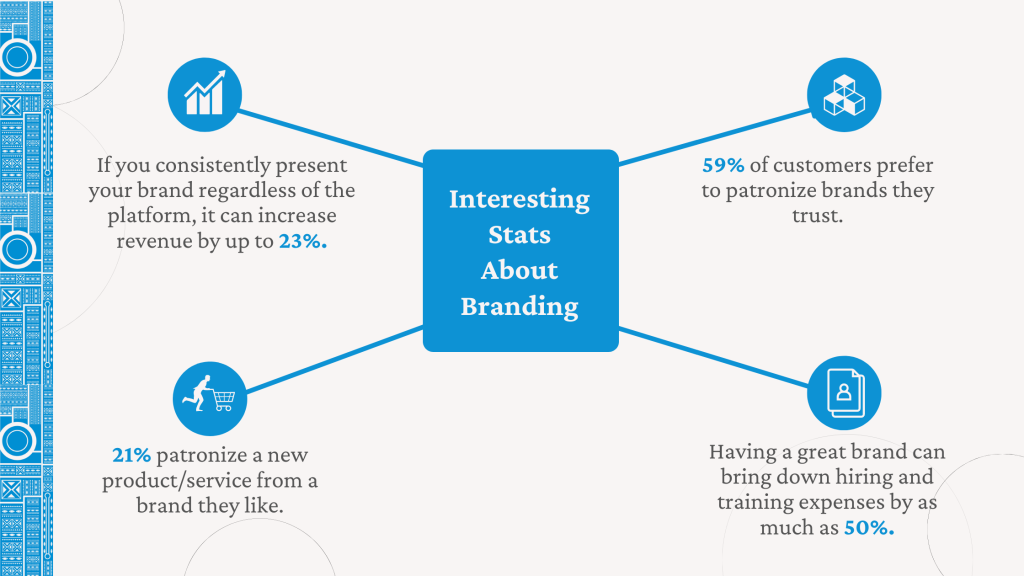
    Revenue and growth are the focus of most MSMEs. How does branding impact these? The following statistics provide the answers.

    “Your brand is the single most important investment you can make in your business.

    Steve Jobs

    DISCLAIMER:

    The material contained in this publication is provided for general information purposes only and does not contain a comprehensive analysis of each item described. Before taking (or not taking) any action, readers should seek professional advice specific to their situation. No liability is accepted for acts or omissions taken in reliance upon the contents of this alert.

    AOA Professional Services is an indigenous tax, regulatory and advisory service firm driven by the values of professionalism and partnership. For further information on the subject matter, reach out to our Teleconsulting Desk

  • Outsourcing: What, Why & When?

    Outsourcing: What, Why & When?

    Every business – Small, Medium, or Large-sized – wants to grow. When the growth happens, it becomes the responsibility of the whole team to sustain the business’ competitive edge. Hence, the need to focus on strategic and technical competence arises while doing away with the company’s non-core functions.

    Here is where outsourcing comes into the picture. With plans to shape the future of business activities in place, keeping up with all the activities a company requires to exist internally takes up time, increases costs, impedes flexibility, efficiency, and performance,

    For most businesses, the best bet is to outsource some functions which are not core of their competence to profound professionals in a way that fosters productivity, reduces cost, and increases task delivery time as against having to do these tasks internally.

    According to Chuks Cohn – Founder & CEO of Varsity Tutors – businesses should outsource:

    • Tasks that are critical to operations but not a vital component of strategy such as Accounting, Tax Remittances, Talent Acquisition, etc.
    • Non-Core functions such as Digital Marketing, Website Development, Cleaning Services, etc.

    But when should you outsource some of your operational functions?

    Knowing when to outsource can provide the best results for your business. This is because using a vendor with the specialist skills that you do not have in your business can speed up delivery, ensure productivity, identify margin opportunities, and flag down risks. In turn, these help businesses focus on their competitive strengths and technical competence.

    Lydia Adams – Vice President, M&C Personiv – suggested that your business should outsource when you:

    • Need to lower costs.
    • Need to focus on your business-critical functions.
    • Need to free up time for strategic development.
    • Need to have profound professionals execute special tasks for the growth of your business such as due diligence, restructuring, business process improvement, etc.
    • The business is growing fast in terms of market share and demand just like the way Apple leverages outsourcing for efficiency.

    “If you deprive yourself of outsourcing and your competitors do not, you’re putting yourself out of business.”

    Lee Kuan Yew – Former Prime Minister of Singapore

    DISCLAIMER:

    The material contained in this publication is provided for general information purposes only and does not contain a comprehensive analysis of each item described. Before taking (or not taking) any action, readers should seek professional advice specific to their situation. No liability is accepted for acts or omissions taken in reliance upon the contents of this alert.

    AOA Professional Services is an indigenous tax, regulatory and advisory service firm driven by the values of professionalism and partnership. For further information on the subject matter, reach out to our Teleconsulting Desk

  • AfCFTA: The Ease of Doing Business in Africa

    AfCFTA: The Ease of Doing Business in Africa

    The African Continental Free Trade Area (AfCFTA) agreement will create the largest free trade area in the world measured by the number of countries participating. The pact connects 1.3 billion people across 55 countries with a combined gross domestic product (GDP) valued at US$3.4 trillion. The combined gross domestic product (GDP) of AfCFTA economies is valued at US$3.4 trillion.

    With the potential to lift 30 million people out of extreme poverty, achieving its full potential will depend on putting in place significant policy reforms and trade facilitation measures.

    World Bank Report

    The agreement will encourage trade relations in Africa by removing tariffs for over 90% of goods traded between member countries. Expectedly, it will lead to the free movement of people within the continent, thereby enabling a single market for air and road transportation.

    The just-concluded Intra-African Trade Fair (IATF2021) hosted by South Africa in Durban also revealed that the AfCFTA is poised to boost commerce across Africa, with $40 billion of trade and investment deals. According to the UN Economic Commission for Africa (UNECA), the AfCFTA agreement has the potential to boost intra-African trade by more than 50% from the low level of 13%.

    AfCFTA provides an opportunity to improve trade facilitation more widely in the continent at borders and along corridors between African countries. The trade facilitation agreement would provide the framework and access to knowledge to guide such improvements, and AfCFTA provides the political momentum and additional commitment mechanism to support broad implementation.

    In addition, the AfCFTA benefits member countries by lowering costs for consumers and producers, reducing administrative red tape, and reducing compliance costs. Of course, the reduction in tariffs will be of benefit to lower the prices of imported goods for consumers, as well as for producers using intermediate inputs.

    In some member countries like Nigeria, Minister of Industry, Trade and Investment, Adeniyi Adebayo, has said the President Muhammadu Buhari administration is adopting a legislation-backed policy to promote the ease of doing business in the country. He added that the revised Companies and Allied Matters Act (CAMA) 2020 and the Petroleum Industry Act 2021 have repositioned the country as an investment destination of choice in Africa. The minister further said that the African Continental Free Trade Area Agreement (AfCFTA) implementation plan is undergoing adoption by the Ministries, Departments, and Agencies (MDAs). According to him, the move is geared at ensuring that existing policy frameworks maximize benefits to the advantage of Micro, Small, and Medium Enterprises (MSMEs).

    In conclusion, the trade will grow substantially with the following stats:

    • The volume of total exports will increase by almost 29% by 2035.
    • Intracontinental exports increase by over 81%.
    • Exports to non-African countries increase by 19%.

    “It is clear that we must find an African solution to Africa’s problems, and that this can only be found in African unity. Divided, we are weak; united, Africa could become one of the greatest forces for good in the world.”

    (Dr. Kwame Nkrumah)

    DISCLAIMER:

    The material contained in this publication is provided for general information purposes only and does not contain a comprehensive analysis of each item described. Before taking (or not taking) any action, readers should seek professional advice specific to their situation. No liability is accepted for acts or omissions taken in reliance upon the contents of this alert.

    AOA Professional Services is an indigenous tax, regulatory and advisory service firm driven by the values of professionalism and partnership. For further information on the subject matter, reach out to our Africa International Helpdesk

  • How NOT To Micromanage

    How NOT To Micromanage

    MSME Managers must understand that running a small business involves so many different tasks and skills that as the business grows bigger, some sort of assistance and division of labour becomes necessary for the business to succeed. Yet a major factor to the success of every enterprise, big or small is how to harness the quality of employees at disposal for business growth.

    Micromanaging can be a stab in the back for most employees who want to give their best to the success of their organization. When you micromanage, you are telling your employee or subordinate that you do not trust their judgement, skills & expertise.

    The following statistics are staggering:

    When you consider these side effects of micromanaging, you see the bigger problem: employee turnover. According to Lewer Benefits, most MSMEs experience an average 15% – 25% employee turnover rate and Work Institute reported that replacing a good employee costs an organization 33% of the worker’s annual salary. Now picture the effect of that when the costs add up.

    So, how can managers and business owners NOT micromanage? Delegate! Yes, delegate effectively. The proper delegation will help eradicate even unintentional micromanagement. So, we expect you to ask; how do you delegate effectively? Let’s look at the following 9 tips recommended by Lauren Landry, an Associate Director at Harvard Business School:

    1. Know what to delegate.
    2. Play to your employees’ strengths and goals.
    3. Define the desired outcome of tasks assigned.
    4. Establish an effective communication channel.
    5. Provide the right resources and reporting level of authority.
    6. Give room for failure to encourage empowerment and a better approach to work.
    7. Be patient.
    8. Give feedback on work done be it constructive or positive. Feedback should however not be demeaning.
    9. Give credit where it’s due.

    While we could have elaborated more on the tips above but for the want of space and your precious time, we leave you with this thought from Brigette Hyacinth, a leading HR Influencer:

    Micromanagement is a complete waste of everybody’s time. It sucks the life out of employees, fosters anxiety and creates a high-stress work environment. Select (i.e Hire) the right people and give them room to get on with the job.


    DISCLAIMER:

    The material contained in this publication is provided for general information purposes only and does not contain a comprehensive analysis of each item described. Before taking (or not taking) any action, readers should seek professional advice specific to their situation. No liability is accepted for acts or omissions taken in reliance upon the contents of this alert.

    AOA Professional Services is an indigenous tax, regulatory and advisory service firm driven by the values of professionalism and partnership. For further information on the subject matter, reach out to our Teleconsulting Desk